
Australia has a strong hand. Are we playing it well?


Business formation and entrepreneurialism are key measures of business dynamism and ultimately, of economic growth, productivity and prosperity. While not all founders expect their business to grow, compete and innovate, those that do play an important role in building a resilient and vibrant economy. For many people, business formation also provides a unique pathway to fulfilling and meaningful work.
This report examines the latest trends in business creation in Australia across all business types, from solo owner-operators to those with aspirations to be the next tech unicorn, and identifies measures to improve the operating environment for emerging businesses.
Our analysis confirms that many Australians still want to start their own business. If anything, this interest has grown over time. We find up to 13 per cent of adults aspire to business ownership as part of their career journey and around eight per cent are already involved in ‘side hustles’ that they hope to grow into viable self-employment or their own business. Desire and intention don’t appear to have become a barrier to business formation.
Despite this, we find the proportion of business owners as a share of the workforce has declined steadily over the past two decades, hitting a record low in 2025. The decline is particularly pronounced for owner-managers with employees and less steep for solo owner-operators. It is evident across all age cohorts, including younger workers.

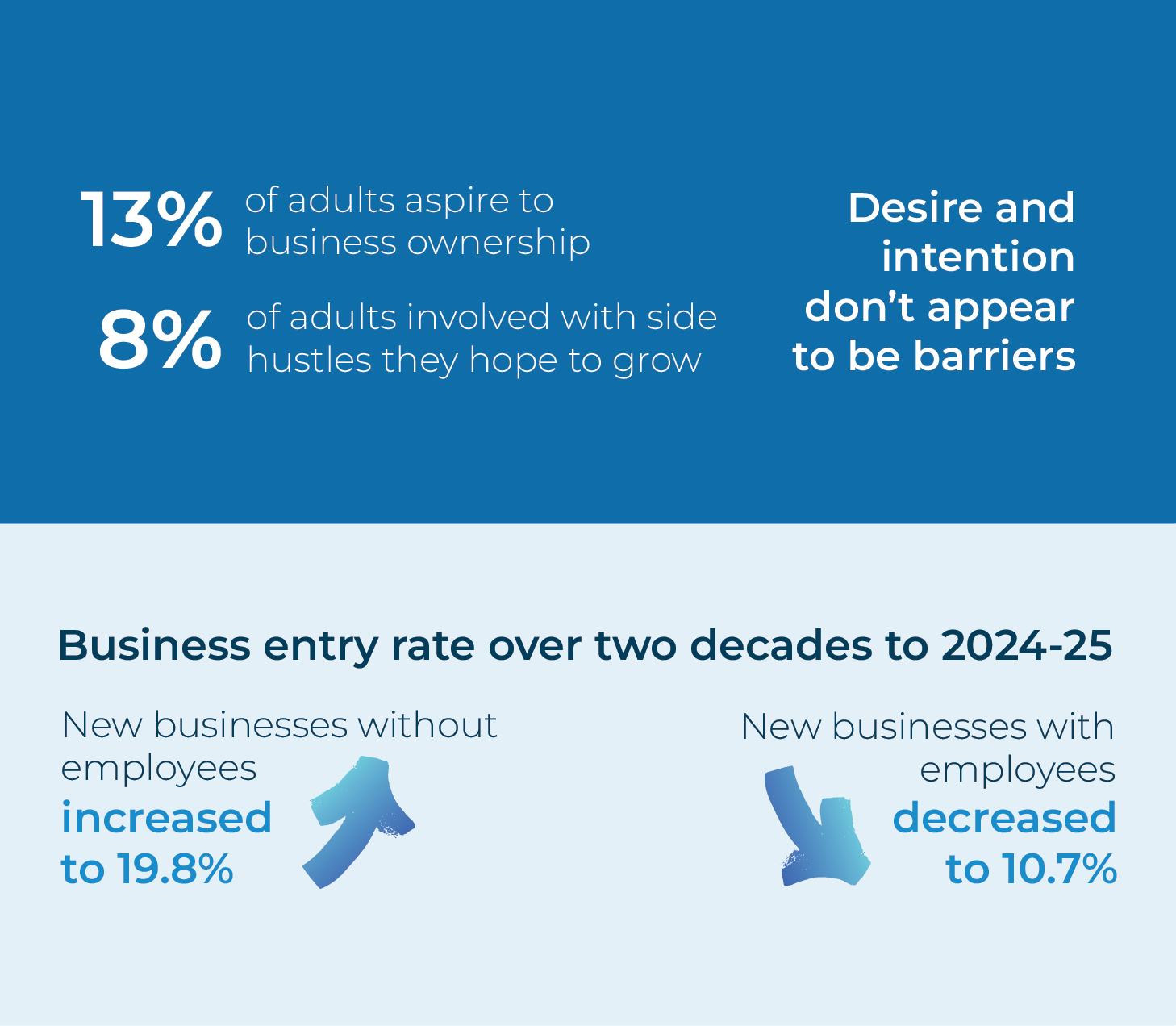
In line with these trends, there has been a long-term decline in the rate of new businesses with employees. This is concerning because a healthy rate of employing-business entries is an important component of business dynamism. Entry rates provide good insight into dynamism trends because they mark the birth of businesses that have made a commitment to growth.
In contrast, there has been an increase in the number and entry rate of new businesses without employees over the last decade. This has coincided with a steady rise in the proportion of workers with multiple jobs. These second jobs can include ‘side hustles’ and ‘digital platform’ work such as deliveries and ridesharing. The majority of these second jobs are undertaken primarily to supplement income, however, rather than as part of a plan to start a business. Many involve low-income activities that may not scale up well into a viable business.
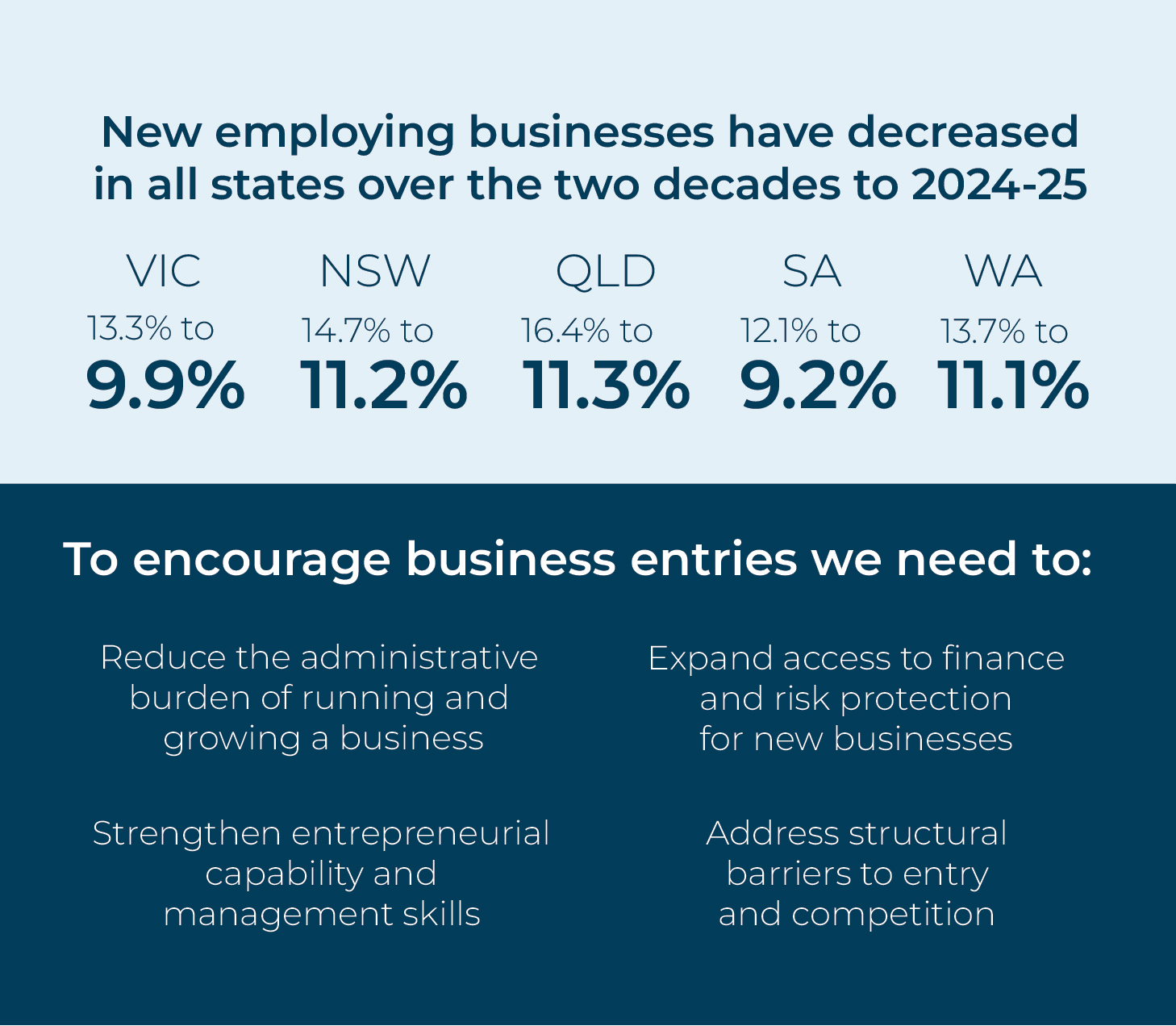
We also find that since the disruptions of COVID-19, the recovery path for business formation rates has varied across states and industries. Victoria has had a weaker and slower recovery in the establishment of “employing businesses” than the other large states, taking it from amongst the leaders to a laggard on this measure.
The broad decline in business creation has coincided with a range of trends that are likely to be collectively discouraging business formation by self-employed owner-managers, including costly access to external finance, insufficient entrepreneurial skills and culture, rising regulatory costs and barriers, and increased market concentration.
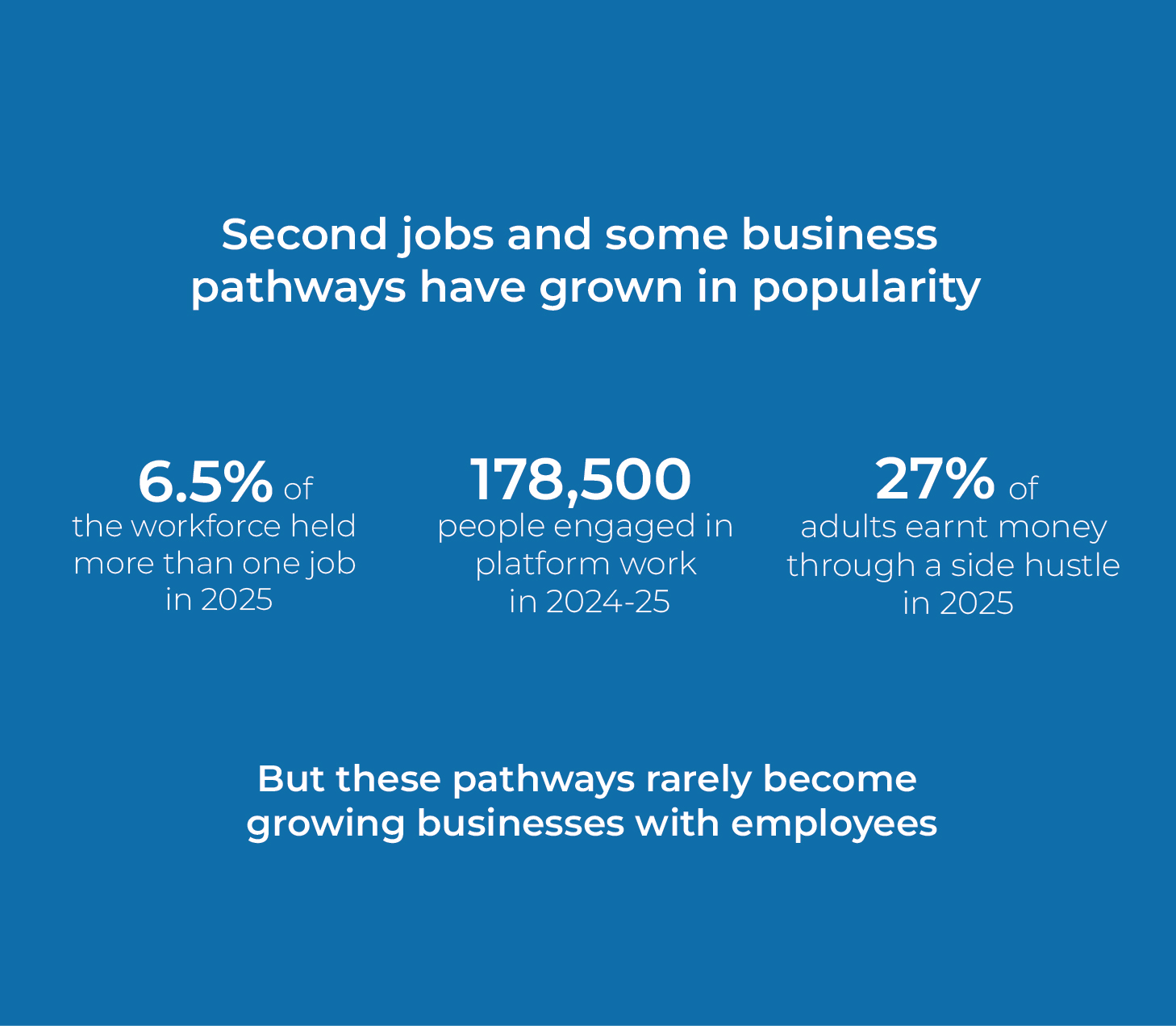
Australia is not alone in this experience – long-term business creation rates have declined globally. However, our barriers appear to be worsening compared to international peers.
In Australia, new business supports are provided by all three levels of government plus education, non-profit, professional and industry organisations. Collectively, they have so far been insufficient to reverse the decline.
The challenge requires action by all stakeholders. The varying post-COVID trajectories across states – in particular Victoria’s weaker recovery – demonstrate the need for a holistic approach that goes beyond national-level settings. Now is the time to review and revise these supports, based on the best local and global evidence.
As a priority, we must: remove as many barriers to starting a new business as possible; design and implement effective, sustainable supports; and remove or mitigate the global and structural factors that are restricting the operating environment for new businesses and ultimately keeping them from growing and prospering.
Report authors:
 Julie Toth Julie Toth Principal Economist, CEDA |  Daniel Beadle Daniel Beadle Economist, CEDA |
Previous research
Explore previous CEDA research reports covering
related themes and broader areas of interest to
discover additional insights and perspectives.