
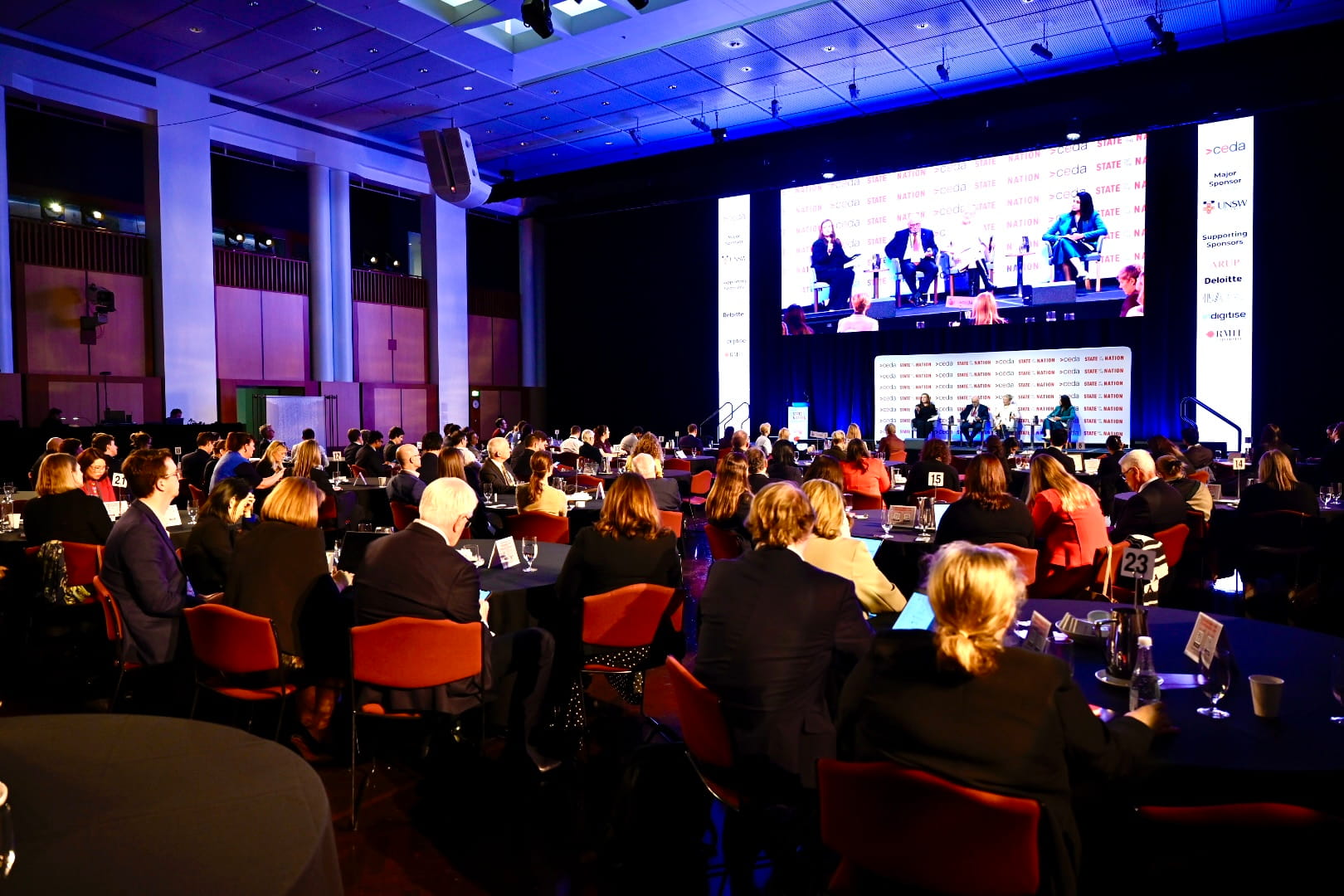
State of the Nation 2026 was framed around a long-term question: what kind of Australia do we want by 2050?
The more immediate question, though, was sharper: can Australia build a more productive, resilient and trusted economy in an ever-adapting world?
That framing came through clearly in CEDA chief executive Melinda Cilento’s opening remarks on Progress 2050, and in Prime Minister Anthony Albanese’s speech on clean energy, artificial intelligence, supply chains, housing, productivity and global uncertainty. Across the day, the same broad argument kept returning: Australia’s future prosperity will not come from relying on the assumptions that carried the country through the last three decades.
Open markets, resource exports, imported technology, global supply chains and US-backed strategic stability have all served Australia well. But the world around that model is changing.
Australia’s next growth model will need to be efficient, but also resilient; open, but also capable; productive, but also trusted.
Resilience is now an economic capability
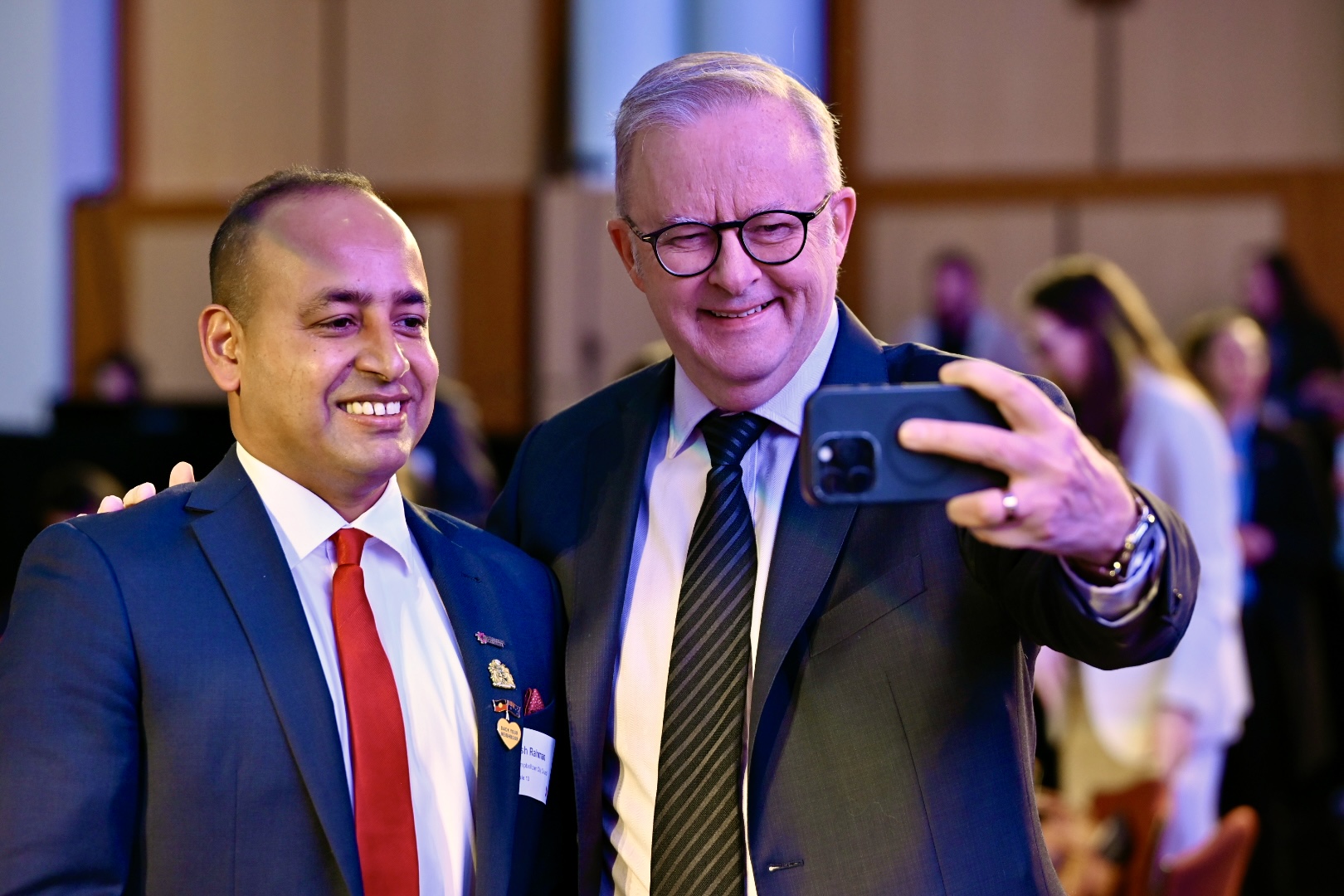
Prime Minister Anthony Albanese’s address set the tone by placing Australia’s economic choices inside a world of persistent uncertainty. The point was not simply that Australia faces risk - it was that risk has become part of the operating environment.
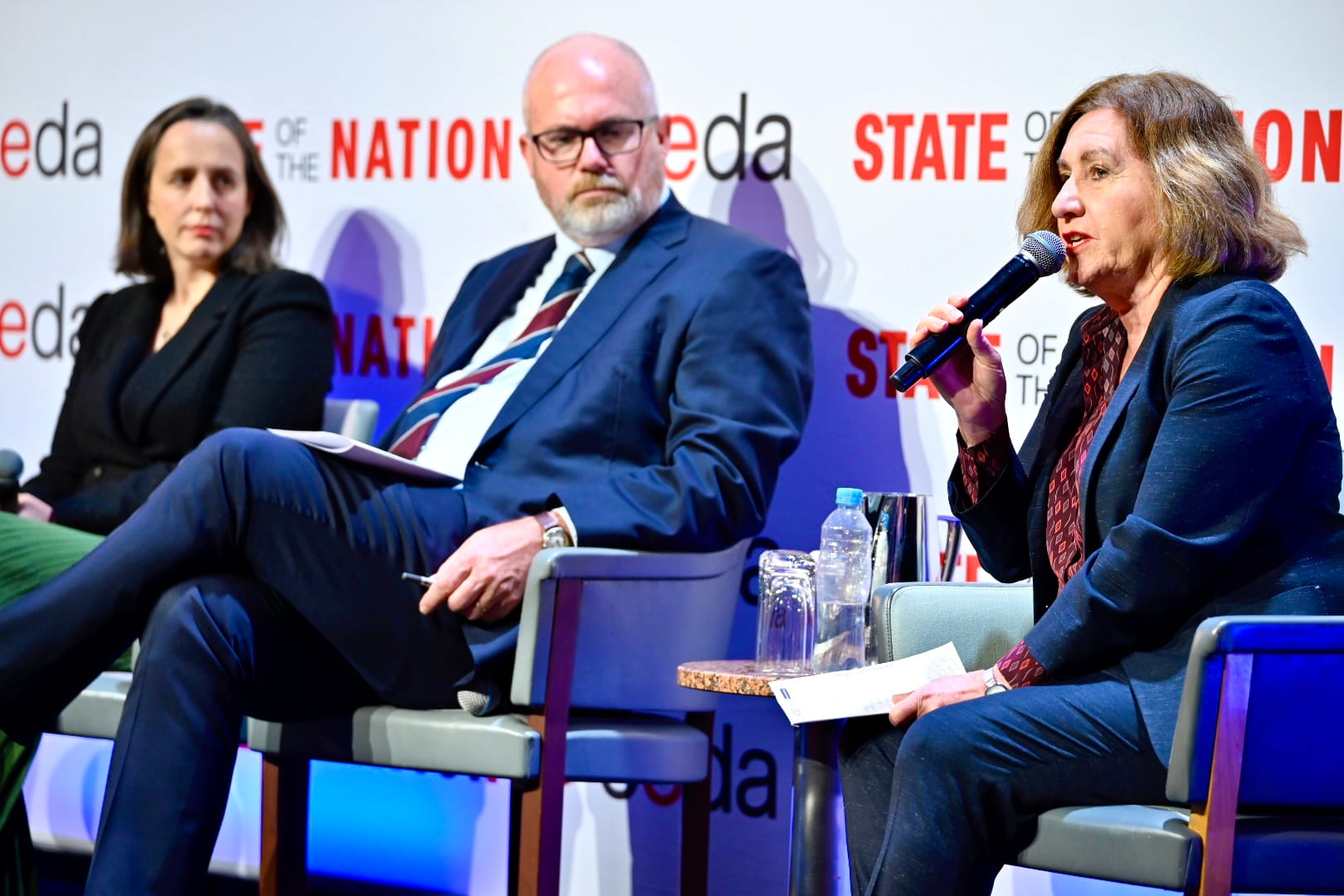
That theme was reinforced in the middle-powers panel, where Arthur Sinodinos, former Ambassador to the US and Chair of the United States Studies Centre at The University of Sydney, argued that Australia has to adjust to a world in which the United States is less predictable and middle powers need greater agency. Cath Bowtell, Chair at IFM Investors, added another layer, describing how long-term capital is increasingly being drawn into questions of security, infrastructure and resilience.
The implication is significant. Resilience is no longer just a defensive concept. It is becoming an economic capability.
In energy, it means reliable domestic supply, storage, transmission, renewables, gas back-up and regional energy diplomacy. In innovation, it means building firms that can commercialise research rather than simply adopting technology developed elsewhere. In foreign policy, it means recognising that economic strength underwrites Australia’s influence.
Productivity policy can no longer be separated from industrial capability, skills, energy security or strategic positioning.
Business as a partner in national prosperity
One of the day’s clearest propositions was proposed by Melinda Cilento, when she argued that business should be treated as “a capability to be drawn on, not a problem to be solved.”
That idea echoed through later sessions. In CEO of Woodside Energy, Liz Westcott's address, Woodside’s history and future investment plans were used to make a broader argument about energy, national capability and long-term policy certainty. Gas, in her framing, is not simply an export commodity. It supports fertiliser production, manufacturing, electricity reliability, regional energy security and relationships with key Asian partners.
The middle-powers panel made a similar argument about capital. Ms. Bowtell discussed long-term institutional investment, including superannuation capital, as part of economic statecraft: a way to support infrastructure, energy transition, digitisation, defence-related assets and regional partnerships.
Capital flows, energy systems, research institutions and industrial firms are no longer just economic assets. They are strategic assets.
This does not mean business gets a free pass. The conference repeatedly returned to social licence, public value and trust. Business will need to invest in workers, use technology responsibly, and approach government as a genuine partner rather than simply seeking special treatment.
But the direction of travel was clear: if Australia wants a more resilient and productive economy, it will need to mobilise business capability more deliberately.
Energy shows the difficulty of real trade-offs
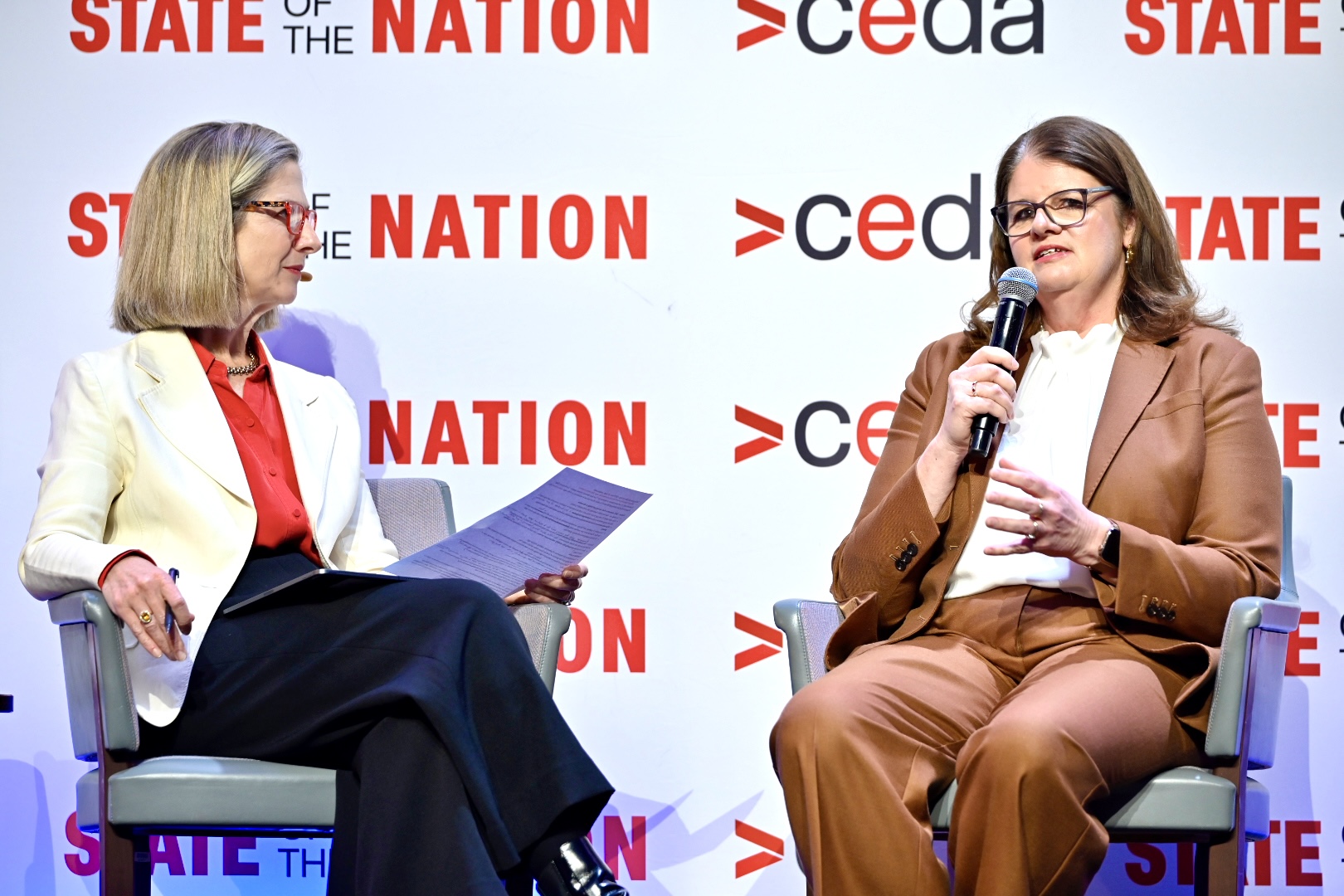
The energy transition was discussed most directly in Ms. Westcott’s session with Kate West, Chief Officer, Business and Markets APAC, at Arup. It was also where the tensions in Australia’s prosperity agenda became most visible.
Ms. Westcott argued that Australia will need more energy overall if it is serious about manufacturing, critical minerals processing, data centres, AI and industrial growth. She also made the case for gas as a backstop for renewables, a support for domestic industry, and part of Australia’s regional energy relationships with countries such as Japan and Korea.
That does not settle the debate about gas, taxation, export controls or climate credibility. But it does make the policy problem more honest.
Australia is trying to decarbonise the energy system, keep power affordable, maintain industrial competitiveness, attract investment, preserve domestic supply, support regional partners and build new industries. These goals can reinforce each other, but they can also collide.
The energy transition will not be won by slogans. It will be won by system design.
A serious transition will need renewables, storage, transmission, gas, demand management, industrial planning and public consent. It will also need a better public conversation about trade-offs.
Innovation needs somewhere to land
The research and development session, featuring Minister Tim Ayres, Dr. Kate Cornick, CEO at the Tech Council of Australia and Jenny Dodd, CEO at Tafe Directors Australia, gave the productivity discussion its practical edge.
Minister Ayres framed the challenge around industrial capability, economic complexity and coordination. Dr. Cornick focused on startups, scale-ups and the conditions needed for more globally ambitious Australian firms. Ms. Dodd brought TAFE into the innovation conversation, emphasising workforce capability, applied skills and place-based problem solving.
Taken together, the discussion suggested that Australia’s problem is not simply a shortage of ideas. It is a shortage of pathways for turning ideas into productive capability.
Universities carry a large share of Australia’s research capacity. The business sector is dominated by small and medium-sized firms. Business investment in R&D remains weak by international standards. Translation is often slow.
The point was not that Australia lacks strengths. It has strong research institutions, skilled people and emerging technology firms. But innovation needs somewhere to land. Without firms that can absorb research, workers who can use new technologies, and institutions that can coordinate effort, ideas will not become industries.
The social compact is economic infrastructure
The social compact was introduced most directly in the Governor-General’s opening message, which placed care, civics, trust and respectful debate at the centre of national prosperity. Ms. Cilento connected that idea to CEDA’s Progress 2050 agenda: a strong economy and a strong social compact have to work together.
The Prime Minister’s speech reinforced the same theme through housing affordability, wages, Medicare, paid parental leave, tax, education and regional opportunity. These were not presented as side issues. They were framed as part of the legitimacy of the economic system.
This matters because Australia often treats the social compact as something to be funded after growth occurs. The event suggested a better view: the social compact is part of the machinery that makes growth possible.
Trust affects whether communities accept infrastructure, migration, energy projects, new technology and industrial change. Housing affects labour mobility and intergenerational fairness. Skills affect productivity. Health and care affect participation. Social cohesion affects political stability.
A country cannot sustain ambitious reform if too many people think the economy is structurally indifferent to them.
Final thoughts
The strongest insight from State of the Nation 2026 was that Australia’s major policy agendas are no longer separate.
The economy, the energy transition, innovation, skills, care, housing, social cohesion and foreign policy now sit on top of each other. The challenge is not simply to pursue each agenda individually, but to coordinate them.
Australia is not short of advantages. It has resources, clean-energy potential, strong research institutions, a large pool of patient capital, proximity to Asia, democratic institutions and a multicultural society with deep regional links.
But advantages do not automatically become capabilities. They have to be organised.
That was the real message of the event. The future is not just something Australia has to adapt to. It is something Australia has to organise itself to shape.
Learn more about CEDA's 2026 State of the Nation Report